✍️The First Time I Got Paid to Write
It happened during the pandemic, when life stood still, but the bills didn’t.
I was a copyeditor at a BPO serving the publishing and research industries, working from home because the world had shut down. The company loved the savings—less office overhead, utilities down by a wide margin—but we got nothing extra. No internet stipend. No allowance for the electricity we burned through eight hours a day. We spent more, earned the same, while they quietly pocketed the difference.
I remember praying for something—anything—that would give me a little breathing room.
One night, I found myself on Twitter, debating whether to add to the noise or just scroll in silence. I chose the latter, looking for something worth reading. Buried in my feed was a two-day-old tweet from a guy looking for a writer. His colleague in the U.S. needed someone to craft 250-word YouTube video descriptions. Their company had a vault of content—marketing strategies, social media breakdowns—and they wanted to start publishing it on YouTube.
I replied, applying for the gig.
What saved me was that they didn’t ask for a writing sample—just a test. The next evening they sent one of their videos and asked me to write a description. I jumped on it, leaning on the same instincts I used for tweets and journal entries: short, tight, clear. Less than 24 hours later, I heard back from them. They liked it. I got the project.
Each video was a full podcast episode, sometimes an hour long. My job was to write a preview—250 words max—loaded with keywords so the video would rank. I worked on the videos between dinner and exhaustion—three hours a night after my day job. When I finished the first batch, about a week later, I got paid $200.
Two hundred dollars.
For context, my monthly salary at my company as a copyeditor in 2020 was $260. Don't ask me how the government, the companies, and the whole system do the math. But this entire nation knows that number is just enough to stay afloat. Anyways, back to the original story, I had just earned nearly a month’s pay in a week of side work. I felt like I’d won something.
Then, just as quickly as it started, the project ended.
They’d realized the videos were outdated. Social media platforms update their algorithms without warning—and faster than a fashion trend. So what's the point of moving their videos about marketing strategies from their website to YouTube? And so the second batch of videos never came. I had to let go.
And before I could even get upset, thank God a quieter thought surfaced:
𝘐 𝘤𝘢𝘯 𝘸𝘳𝘪𝘵𝘦 𝘴𝘰𝘤𝘪𝘢𝘭 𝘮𝘦𝘥𝘪𝘢 𝘤𝘢𝘱𝘵𝘪𝘰𝘯𝘴 𝘧𝘰𝘳 𝘣𝘶𝘴𝘪𝘯𝘦𝘴𝘴𝘦𝘴 𝘢𝘯𝘥 𝘦𝘢𝘳𝘯 𝘦𝘹𝘵𝘳𝘢 𝘤𝘢𝘴𝘩!
And the rest is history.
P.S. What feels like a lockout is sometimes a gentle reroute.
And as I keep looking for opportunities, this is the only reminder I needed to hear today.
In Jefferson Fisher I Trust
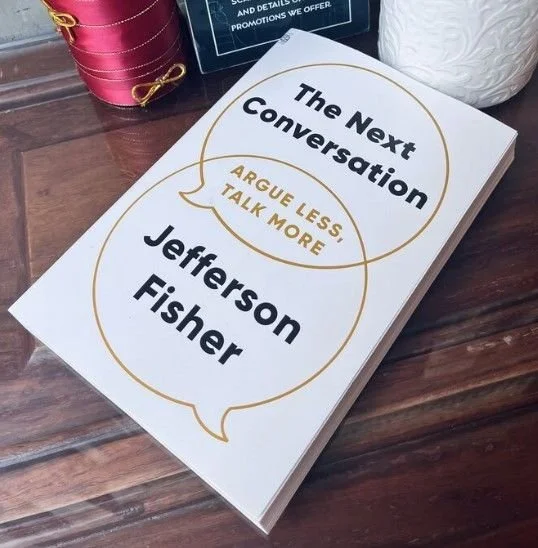
This is for the peacekeepers. The fighters. The ones who walk away.
And especially for those who grew up without a model for what healthy conflict looks like but are now choosing to end that cycle.
Because let’s be honest…
A lot of people weren’t raised with models of calm conflict. They saw shouting, silence, and stonewalling. They learned to match energy, not regulate it.
If you’ve ever thought:
"I hate confrontation, but I also hate feeling ignored."
"I never know what to say until it’s too late."
"I want to speak up without coming off as harsh."
"I’m tired of being cast as the villain for telling the truth."
"I don’t want to win an argument. I want to be understood."
"I want to mend what’s broken without burning bridges."
Then it doesn’t matter whether you’re in HR, leading a team, serving customers, or just existing as a human adult. If conflict leaves you feeling stuck or silenced, this book is your reset button.
The man you're going to be thankful for is Jefferson Fisher. He’s a trial attorney, communication coach, and bestselling author of this gem right here: The Next Conversation: Argue Less, Talk More.
He’s best known for his immediately useful short-form videos. Practical and punchy breakdowns on how to stay calm, clear, and connected in high-stakes conversations. With your boss. Your partner. That one defensive coworker.
I like this guy. A lot. I was part of the crowd that asked for a book version of his Instagram reels. And he delivered.
Man he's got the right words for every scene we wish we had handled better. And you'll get a lot of them from here.
Grab the book.
Listen to the podcast.
Watch the reels.
You’ll see what I mean: a badass communicator trying to reach people where it hurts most. Right in the middle of the fight, when they feel unheard, unseen, and undone.
Until then…
Here's what's coming your way, ready or not:
📌3 essentials for healthy and effective communication:
→ Never win an argument
→ Your next conversation
→ Transmission ≠ connection
📌How to walk the walk:
→ Say it with control
→ Say it with confidence
→ Say it to connect
You're welcome for your next reading recommendation. 😉
Happy Sunday Asia. And the rest of the world, good night.

Something random today — the number 17
Here are 17 lessons that read like advice, but work like armor.
1. Many of the problems we face come from our inability to sit quietly and think.
2. Always say less than necessary. When you speak less, you are less likely to reveal information that others could exploit.
3. 20 years from now you'd give anything to be this age again, exactly this healthy, and have this time again. Go do some main character shit before it's too late. - Anonymous
4. The only person you should be comparing yourself to is the person you were yesterday.
5. There are people less qualified than you, doing the things you want to do, simply because they decided to believe in themselves.
6. Goals are good for setting a direction, but systems are best for making progress. - James Clear
7. Your best requires rest. So prioritize sleep.
8. Be quiet, work hard, and stay healthy. It’s not ambition or skill that is going to set you apart but sanity. - Ryan Holiday
9. You can’t control them. But you can control how you respond.
10. The first mistake is never the one that ruins you. It is the spiral of repeated mistakes that follows. Missing once is an accident. Missing twice is the start of a new habit. - James Clear
11. We buy things we don't need with money we don't have to impress people we don't even like. - Dave Ramsey
12. You can give without loving. But you can’t love without giving. - Rick Warren
13. Never underestimate the power of compounding interest. Whether it's investing ― or debt.
14. God sometimes removes a person from your life for your protection. Don't run after them. - Rick Warren
15. Emotionally safe people don't pressure you to share private information or other people's secrets. Remember: people who gossip to you may also gossip about you.
16. Difficult parents can't regulate their emotions but expect their children can. Guess what. You don’t need to be a reflection of their unprocessed trauma. It’s up to you to break generational curses. When they say, “It runs in the family,” you tell them, “This is where it runs out.”
17. You can still create a beautiful life for yourself, even if you've lost years to trauma, mental illness, or a series of failures. Your story isn't over yet.
Some of these words are a reflection of my own life staring back at me, others echo the lives of my friends, a friend of a friend, and probably some stranger like you.
If you’re fighting for the best version of yourself, reading stuff about character development, emotional strength, and mental toughness.
Then this is right up your alley.
Kind of a reminder, you don't have to be grateful for the struggles in life. But damn... Be grateful for the resilience and the ability to adapt.
Here’s to life! 🥂💫
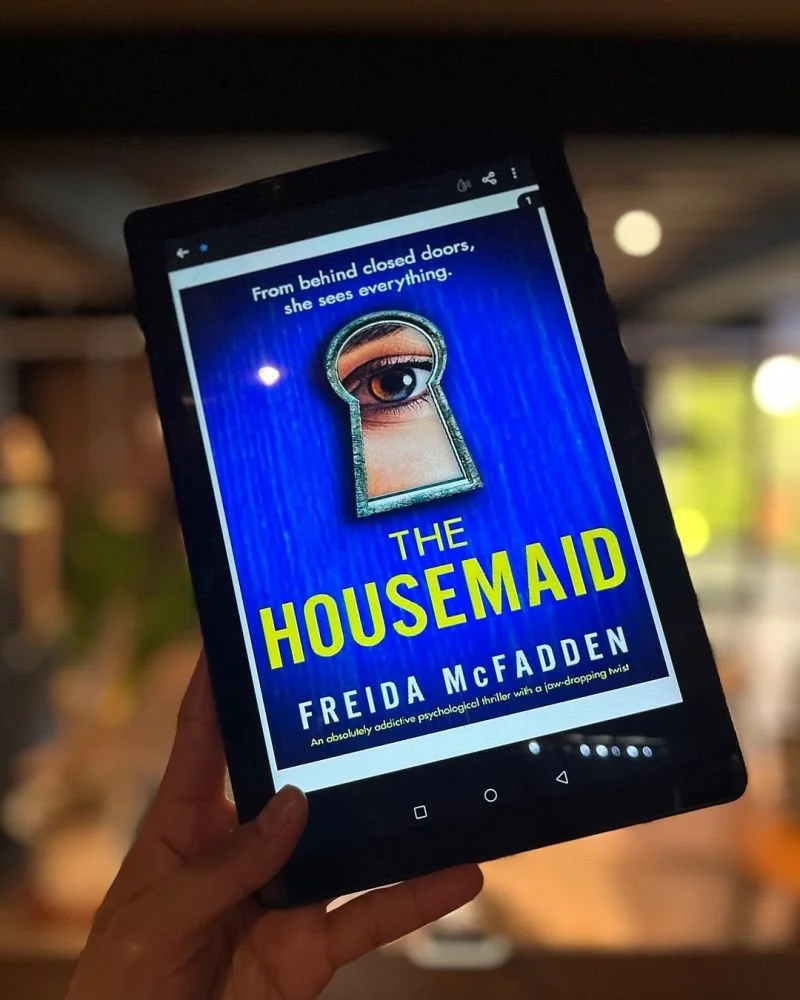
𝗜𝘁’𝘀 𝘁𝗵𝗲 𝘄𝗲𝗲𝗸𝗲𝗻𝗱. 𝗠𝘆 𝗵𝗲𝗮𝗿𝘁 𝗶𝘀 𝗿𝗲𝗮𝗱𝘆 𝗳𝗼𝗿 𝗮𝗻𝗼𝘁𝗵𝗲𝗿 𝘁𝗲𝗻𝘀𝗶𝗼𝗻, 𝘀𝘂𝘀𝗽𝗲𝗻𝘀𝗲, 𝗮𝗻𝗱 𝗶𝗻𝘁𝗿𝗶𝗴𝘂𝗲.
And if I had to give my two cents on why reading fiction is good for you, it’s this...
Fiction makes you sharper — and more human.
Take a thriller, for example. It pushes you to constantly practice theory of mind.
- Guessing motives
- Detecting hidden emotions
- Updating your judgments as the story unfolds
It’s like a safe “mental gym” for understanding people better in real life.
Now I’ve read enough — and heard enough from psychologists, therapists, researchers, and bestselling storytellers with serious behavioral chops — to know this much: fiction reshapes how we think, feel, and connect.
Benefits of reading thrillers:
- Prepares you for messy real-life dynamics
- Sharpens sensitivity to dialogue and subtext
- Creates cultural connection points (shared stories)
- Lets you wrestle with moral ambiguity (loyalty vs. justice)
- Offers safe fear and conflict (adrenaline without danger)
- Rehearses trust, betrayal, and forgiveness
And for those of us who love the power of words, you’ve heard this before and you're hearing about it again.
Reading fiction makes you a better writer.
Here's how:
- Voice development
Fiction tunes your ear to cadence, rhythm, and variety. You hear how authors balance description, dialogue, and pacing. Skills that sharpen nonfiction and marketing alike.
- Narrative structure mastery
Thrillers are masterclasses in tension, pacing, and payoff. They teach you how to hook readers, raise stakes, and deliver impact.
- Characterization = audience insight
Layered characters show you how motives and fears drive decisions — the same lens you need for audience personas in copy or strategy.
- Metaphor and imagery reservoir
Fiction expands your mental library of analogies and sensory detail, giving your writing texture without falling back on clichés.
- Empathy = better communication
Living inside characters’ minds helps you anticipate readers’ emotions, making your words more resonant and persuasive.
- Dialogue = natural flow
Well-crafted dialogue sharpens your ear for rhythm and brevity — essential for copy that sounds human, not mechanical.
- Vocabulary expansion (without pretension)
Contextual learning builds a broad, nuanced vocabulary and teaches you when simplicity outshines showiness.
- Confidence with ambiguity
Thrillers and family dramas thrive on moral gray zones. They train you to trust your reader’s intelligence. To imply rather than explain. To show rather than tell.
In short: reading fiction doesn’t just make you better at understanding people. It makes you better at crafting sentences. You absorb rhythm, structure, empathy, and style. The raw ingredients of great writing.
So, what are you reading this weekend?
I read this Frieda McFadden page-turner last week. And like I said. Am ready for another one. Probably a David Baldacci.